
The Musée national Picasso-Paris sits at 5 Rue de Thorigny, in the 3rd arrondissement. From the Hôtel Saint-Christophe, on Rue Lacépède in the 5th arrondissement, you’ll reach it in 25 minutes on bus 75, or in a 29-minute walk across the Seine via the Pont Marie. That’s the distance between the Left Bank and the Marais, the two neighbourhoods most visitors to Paris want to cover in a single trip.
Staying in the 3rd arrondissement to be right by the Picasso Museum only makes sense if the Marais is your one and only destination. If your plans also include Notre-Dame de Paris, the Panthéon, or the Luxembourg Gardens, the Latin Quarter is the better base geographically. You’re right in the middle of the historic Left Bank, and the Marais is still under 30 minutes away.
The Musée national Picasso-Paris
The museum wasn’t built for Picasso. It came into being after his death, through an unusual fiscal arrangement. When the artist died in 1973, his heirs settled their inheritance tax by handing over to the French state a portion of the works Picasso had kept in his own studios and homes. What you see in the museum today, in other words, is what the artist himself chose to keep.
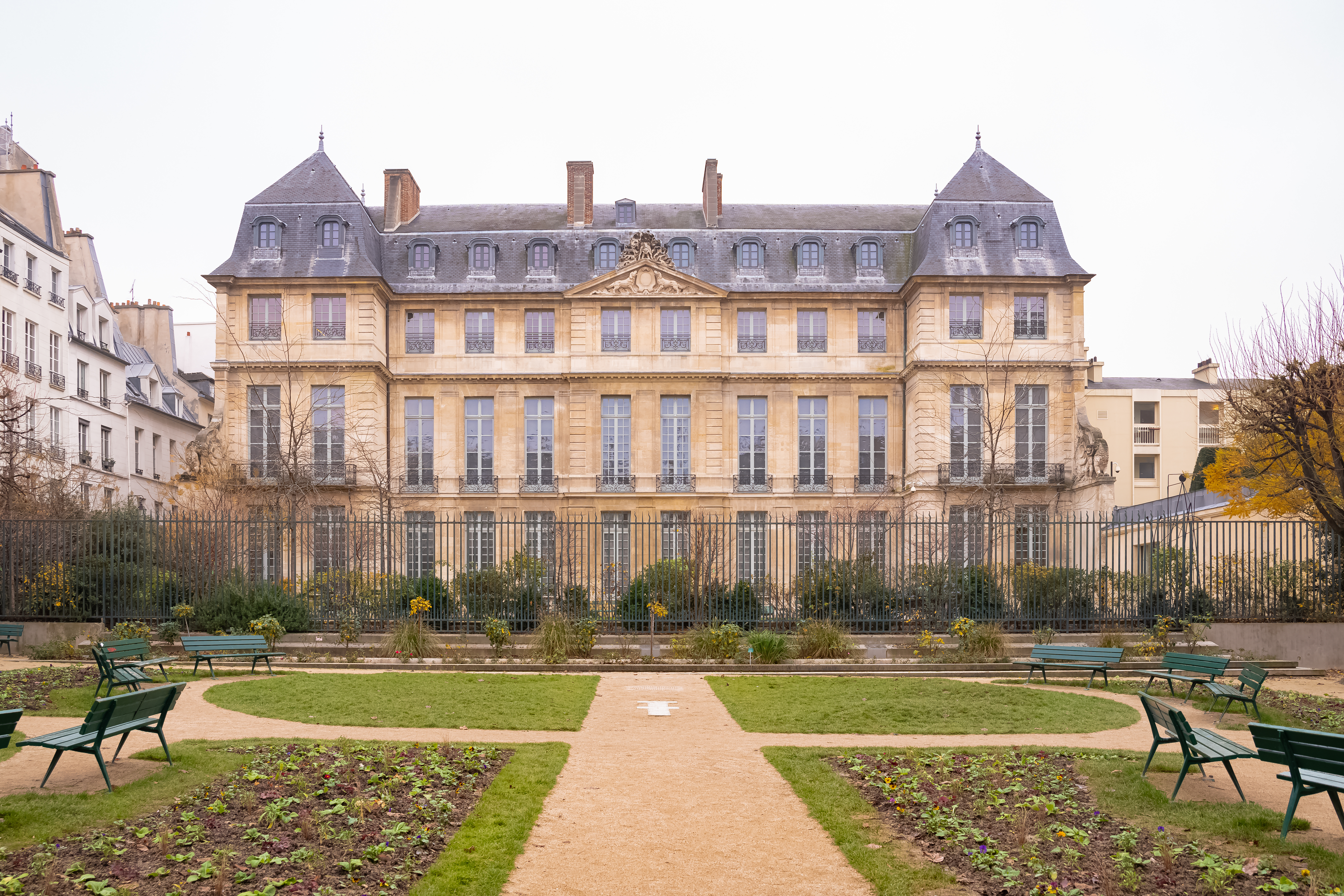
The state chose to house the collection in the Hôtel Salé, a 17th-century mansion listed as a historic monument since 1968, built between 1656 and 1660 for Pierre Aubert de Fontenay. This tax farmer had made his fortune collecting the gabelle, the royal tax on salt, and Parisians nicknamed his residence “the salted mansion” to poke fun at him. The sculptures in the courtyard of honour are attributed to Gaspard and Balthazar Marsy and Martin Desjardins, the king’s own sculptors.
The Hôtel Salé’s life before it became a museum
- 1656–1660: built for Pierre Aubert de Fontenay, tax farmer for the royal salt levy
- 18th century: the building serves as the Venetian embassy, then as a private residence
- 19th century: used as the École Centrale des Arts et Manufactures, later as a national literary and scientific depository
- Early 20th century: part of the building is used by the Ministry of Foreign Affairs
- 1968: listed as a historic monument
- 1974: chosen to house the Picasso collection, a year after the artist’s death
- 1985: the Musée national Picasso-Paris opens to the public
Picasso once told Gertrude Stein he wanted “an old house.” The Hôtel Salé fits that wish exactly.
The architecture of the Hôtel Salé: a palace of the Grand Siècle
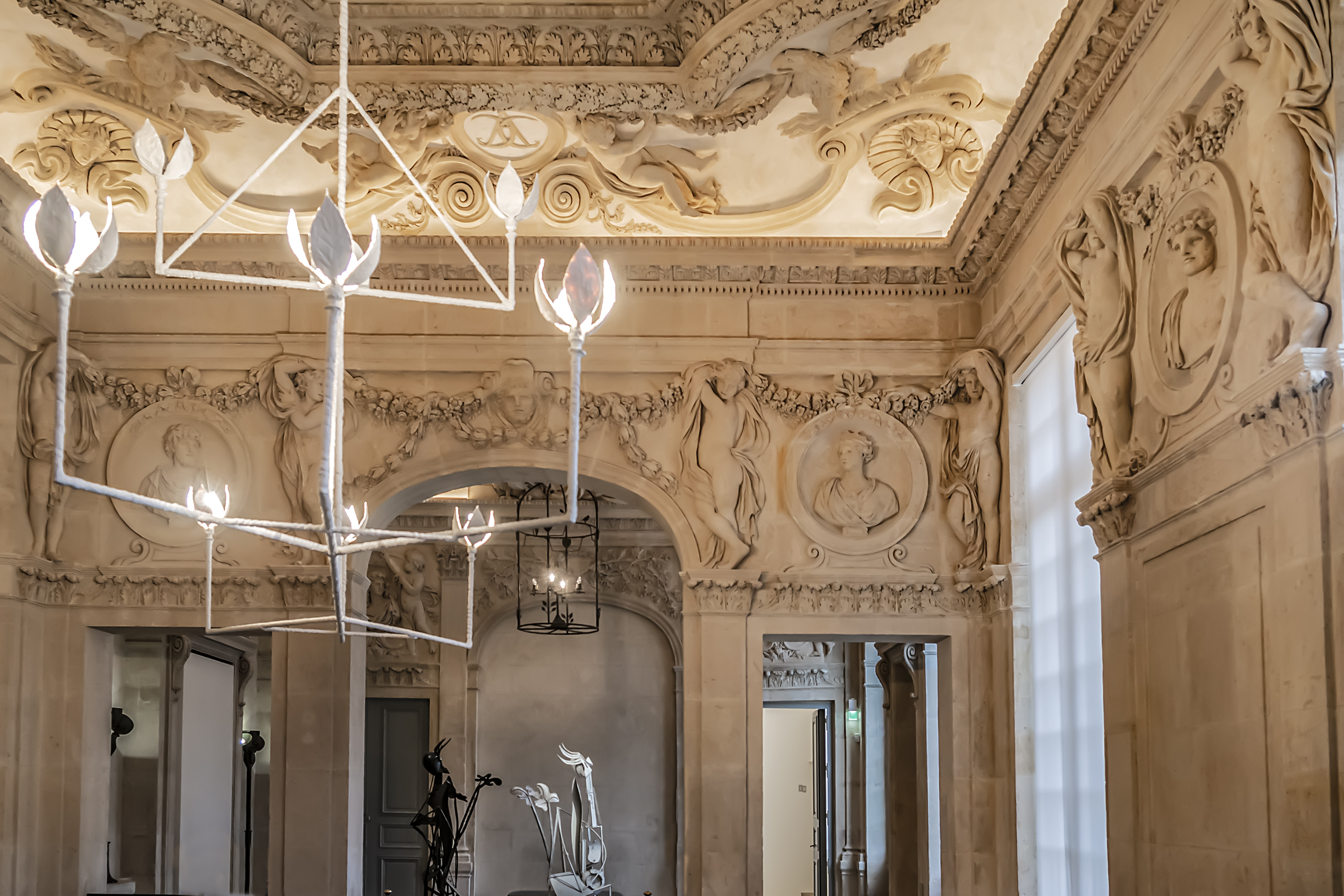
The Hôtel Salé’s architecture is a textbook example of 17th-century French classicism. The courtyard façade, the grand staircase, and the proportions of the double-wing layout make it one of the finest surviving examples of the period in the Marais. Architect Roland Simounet oversaw the interior conversion for the museum’s 1985 opening, working within the constraints of its historic-monument listing.
The garden and outdoor spaces
The garden surrounding the building is open to the public free of charge and makes for a discovery in its own right, families included. It lets you take in the scale of the building from outside and study the carved details on the façade. The former jeu de paume court, tucked away in the outbuildings, is part of the site’s architectural heritage. The museum’s entrance hall and bookshop are on the ground floor, right as you step into the courtyard.
What’s inside the Picasso Museum’s permanent collection
The Musée national Picasso-Paris holds the richest collection of the artist’s work anywhere in the world. It spans his entire career, from his early years in Barcelona to the late series painted in Mougins. Here’s what you’ll actually find on the walls:
- 297 paintings, including Paul as Harlequin (1924), Portrait of Dora Maar (1937), and Two Women Running on the Beach (1922)
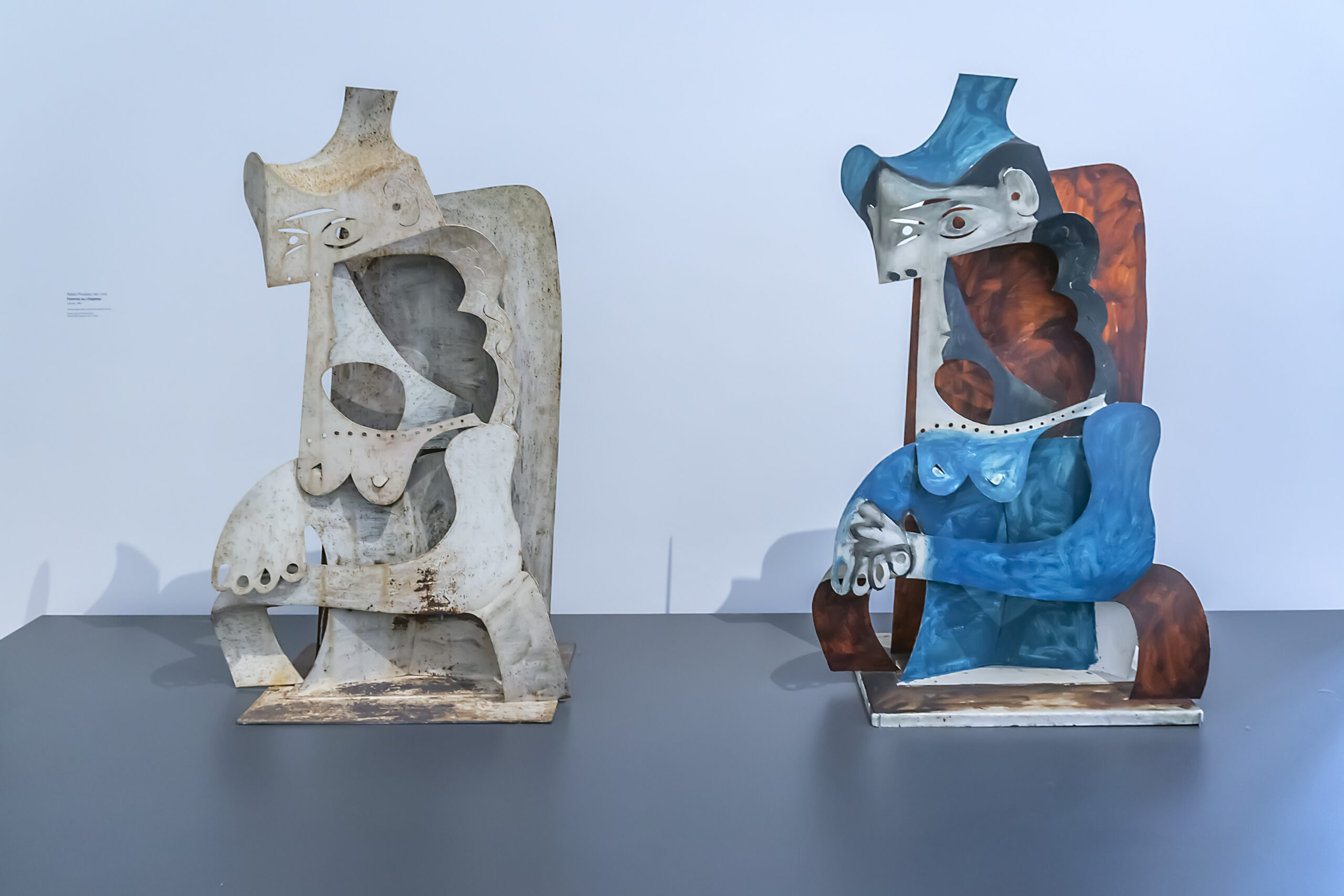
- 368 sculptures and assemblages, some one of a kind, made from cardboard, metal and salvaged wood
- 92 books illustrated by Picasso
- Over 200,000 archival items: photographs, letters, manuscripts
- Works from Picasso’s own private collection: Matisse, Cézanne, Degas, Rousseau, Miró, Derain
That last point is usually what surprises visitors most. Picasso collected his contemporaries. Seeing what he chose to hang in his own home gives you a different way of reading his own work.
The library and research resources
The Musée national Picasso-Paris also houses a specialist library and documentation centre, open to researchers by appointment. It’s one of the most complete archives on Picasso in Paris and his era. Family activities run throughout the year — details and the current programme are on museepicassoparis.fr.
Picasso Museum Paris: opening hours, prices and booking
Opening hours and closing days
- Open Tuesday to Sunday, 9:30am to 6pm — last entry at 5:15pm
- Late opening the first Wednesday of the month, until 10pm
- Closed Mondays, 1 January, 1 May and 25 December
- Occasional closures possible in January and October — check museepicassoparis.fr before you go
- The museum is marking over 40 years open to the public this year, having opened its doors in 1985
Prices and how to get in
- Full price: 16 euros
- Family rate: 12 euros per adult accompanying a child
- Free entry on the first Sunday of the month — no booking available for this slot
- Paris Museum Pass accepted
- Audio guides available on site for an extra fee, in six languages: French, English, German, Spanish, Italian, Chinese
- The museum café keeps the same days and hours as the exhibition rooms
Booking online is strongly recommended: it guarantees priority entry within half an hour of your chosen time slot. On weekends and during school holidays, the walk-in queue can run past 45 minutes.
Plan on 1.5 to 2 hours for the permanent collection and whichever temporary exhibition is on.
Temporary exhibitions at the Picasso Museum in 2026
Until 6 September 2026, the museum is running a virtual reality experience built around Guernica. It traces the painting’s story from its 1937 commission through to its status as a global political icon. It’s one of the few ways to get this close to the painting without travelling to Madrid.
What to know about the temporary exhibitions
- Temporary exhibitions are included in the standard entry ticket
- The full programme is available at museepicassoparis.fr
- The most recent exhibition explores the connections between Picasso and the decorative arts
- The museum belongs to France’s national network of cultural institutions — the events calendar is on culture.gouv.fr
- Touring exhibitions drawn from the collection are regularly staged across France and abroad — details on museepicassoparis.fr
Family activities and guided tours
The Musée national Picasso-Paris runs workshops and themed tours for families and school groups year-round. Some activities require booking ahead — details and the full programme are at museepicassoparis.fr. The museum garden is free to enter and makes a good breather between galleries.
Getting to the Picasso Museum from Place Monge and the Latin Quarter
There are two ways to get there from the Hôtel Saint-Christophe, 17 Rue Lacépède.
Bus 75 from Cardinal Lemoine: 25 minutes
This is the most direct route. The Cardinal Lemoine stop is a 3-minute walk from the hotel. Bus 75 heads towards the Marais; get off at Saint-Paul after 6 stops. From there, it’s an 8-minute walk to the museum via Rue Saint-Antoine and then Rue de Thorigny. The ticket costs €2.15, and buses run every 8 to 10 minutes.
It’s the same stop you’d use for a full day exploring the Marais, so you can easily combine Place des Vosges, Rue des Rosiers and the Musée Carnavalet on the same trip.
On foot along the riverbanks: 29 minutes
Set off from Rue Lacépède and head down towards the Seine via Rue du Cardinal Lemoine. Follow the Left Bank quays eastwards as far as the Pont Marie, then cross to the Right Bank and continue up Rue Vieille du Temple to Rue de Thorigny. The walk covers 2.4 kilometres. From the Pont de la Tournelle, you get the most direct view there is of Notre-Dame’s apse.
Getting there by metro and other practical details
- Metro line 7 from Place Monge or Jussieu — get off at Saint-Paul or Pont Marie
- From Saint-Paul: an 8-minute walk to Rue de Thorigny, 75003 Paris
- Single ticket at €2.15, or covered by the Navigo pass
- Wheelchair access is available — check the accessibility page at museepicassoparis.fr
Hotels near the Picasso Museum Paris: which area to choose
Finding a well-placed hotel for visiting the Picasso Museum in Paris really comes down to your overall itinerary. The museum sits in the Marais, a central but somewhat self-contained neighbourhood relative to most of the city’s other landmarks.
Staying in the Marais: what you gain, what you give up
Hotels in the Marais, right by the museum, put you within walking distance of the Musée national Picasso-Paris, Place des Vosges and the Musée Carnavalet. That’s the right call if your whole trip is built around this one neighbourhood. On the other hand, Notre-Dame, the Panthéon, the Luxembourg Gardens and the Eiffel Tower are all 30 to 45 minutes away — a real consideration if you’re trying to combine several sights in a single day.
Staying in the Latin Quarter: a central base
From the Latin Quarter, the Picasso Museum is 25 minutes away by bus, or a 29-minute walk. But more to the point, Notre-Dame, the Panthéon, the Jardin des Plantes and the Luxembourg Gardens are all under 15 minutes. For a trip covering both the Marais and the Left Bank, this is the most efficient place to be. Hôtel Saint-Christophe, at 17 Rue Lacépède in the 5th arrondissement, sits exactly there — with the Place Monge and Jussieu metro stations a 3-minute walk away, giving you a direct line to every corner of Paris.
What to do around the Picasso Museum in the Marais
The Picasso Museum sits right at the heart of the historic Marais. Within a 10-minute walk of Rue de Thorigny, you’ll find:
- Place des Vosges: inaugurated in 1612 under Henri IV, it’s the oldest square in Paris. Free to visit. Victor Hugo’s house at number 6 is free year-round.
- Musée Carnavalet: two Renaissance mansions devoted to the history of Paris. The permanent collection is entirely free.
- Rue des Rosiers: the historic heart of the city’s Jewish quarter since the 13th century, lined with delicatessens and famous for its falafel.
- Village Saint-Paul: a string of medieval courtyards linked by covered passages, home to antique dealers and galleries. Free to wander, and rarely crowded with tourists.
Why the Hôtel Saint-Christophe is a smart base for the Picasso Museum
If the Marais is the whole of your trip, staying in the 3rd arrondissement makes sense. But most travellers visiting the Picasso Museum also want to see Notre-Dame, the Panthéon, the Jardin des Plantes or the Luxembourg Gardens. Every one of those sights is under 15 minutes’ walk from the Hôtel Saint-Christophe, and 25 to 40 minutes from any hotel in the Marais.
The hotel, in detail
- Address: 17 Rue Lacépède, 5th arrondissement — from here, the Picasso Museum is a 25-minute trip
- 31 soundproofed, air-conditioned rooms, including one wheelchair-accessible room with a walk-in shower
- Reception open 24/7 — free fibre Wi-Fi
- Free secure luggage storage available all day, handy if you’re visiting the Picasso Museum on your last day before checkout
- Continental breakfast served 7am to 10am for €9: artisan pastries, fresh baguettes, cheese, charcuterie, fruit salad
- Covered parking at Indigo Patriarches, 300 metres away — around €22 for 24 hours
Getting around from the hotel, to the museum and the rest of Paris
- Place Monge metro (line 7): 3-minute walk — direct access to Gare du Nord and Gare de l’Est in 25 minutes
- Jussieu metro (lines 7 and 10): 3-minute walk
- Bus 75 from Cardinal Lemoine: direct route to the Marais and the Picasso Museum
- A central spot for exploring Paris, sitting right between the Left Bank and the Right Bank
To check availability, book your stay directly through our official site. You’ll skip the booking-platform commission and get access to every room we have available.
To plan the rest of your time in the 5th arrondissement, take a look at our guides to the Arènes de Lutèce (a 3-minute walk from the hotel), the Jardin des Plantes (5 minutes), Rue Mouffetard, and Place de la Contrescarpe.
Discover Our Rooms & Suites
Whether you’re travelling solo, as a couple, or on business, find the right room for your stay in Paris:
Single Room
1 person . 1 bed
À partir de 105€
Double Room
2 people . 1 double bed
À partir de 115€
Twin Room
2 people . 2 x 1 single bed
À partir de 115€
Single room
1 person . 1 bed
À partir de 105€
Double Room
2 people . 1 double bed
À partir de 115€
Twin Room
2 people . 2 single bed
À partir de 115€
FAQ – Visiting the Picasso Museum Paris
Looking for a hotel near the Marais to make the most of your Parisian getaway? Discover why the Latin Quarter is the perfect starting point to explore the heart of the capital with ease.
How long does it take to travel from the Latin Quarter to the Picasso Museum in Paris?
From the Hôtel Saint-Christophe at 17 Rue Lacépède (5th arrondissement), the Musée national Picasso-Paris at 5 Rue de Thorigny (3rd arrondissement) is 25 minutes away. Simply take Bus 75 from the Cardinal Lemoine stop, get off at Saint-Paul, and walk for 8 minutes. If you prefer walking, a scenic 29-minute walk (2.4 kilometers) across the Seine via Pont Marie will get you there directly.
Do I need to book tickets in advance for the Picasso Museum Paris?
Booking your tickets online in advance is highly recommended. It guarantees priority entry within 30 minutes of your selected time slot. On weekends and during school holidays, the on-site waiting queue can easily exceed 45 minutes.
What are the opening hours of the Picasso Museum Paris?
The museum is open Tuesday to Sunday from 9:30 AM to 6:00 PM (last entry at 5:15 PM). It is closed on Mondays, January 1st, May 1st, and December 25th. Additionally, late-night openings are held on the first Wednesday of every month until 10:00 PM.
Can we visit the Marais and the Picasso Museum in the same day from the Latin Quarter?
Absolutely. Staying at the Hôtel Saint-Christophe in the Latin Quarter makes it incredibly easy to combine both. A quick direct bus ride or a beautiful walk across the Seine brings you straight to the Marais, allowing you to visit the Picasso Museum in the morning and spend the afternoon exploring the historic streets, Place des Vosges, or local shops.
What is the best bus stop to go to the Picasso Museum from Place Monge?
The best bus stop is “Cardinal Lemoine” (located just a 3-minute walk from Place Monge and the hotel). From there, take Bus 75 directly to the “Saint-Paul” stop in the Marais. It takes about 25 minutes door-to-door.
Which museums can you combine with the Picasso Museum in the Marais?
Within a 10-minute walk of the Picasso Museum, you can easily visit the Musée Carnavalet (dedicated to the history of Paris, with a free permanent collection) and Victor Hugo’s House on Place des Vosges (also free of charge).